
Crop Spraying Without a Plane: DJI's Agras T100 Spray Drone
Verdict Owning costs about $10.44 an acre at 2,000 acres against $12.50 hired, once the T100's real $39,999 replaces the $23,000 drone in MU's model. Break-even moves from 980 acres to roughly 1,300.
Prices are US list prices at the time of publication. Shipping, duties and local taxes vary by country — check with the manufacturer before ordering.
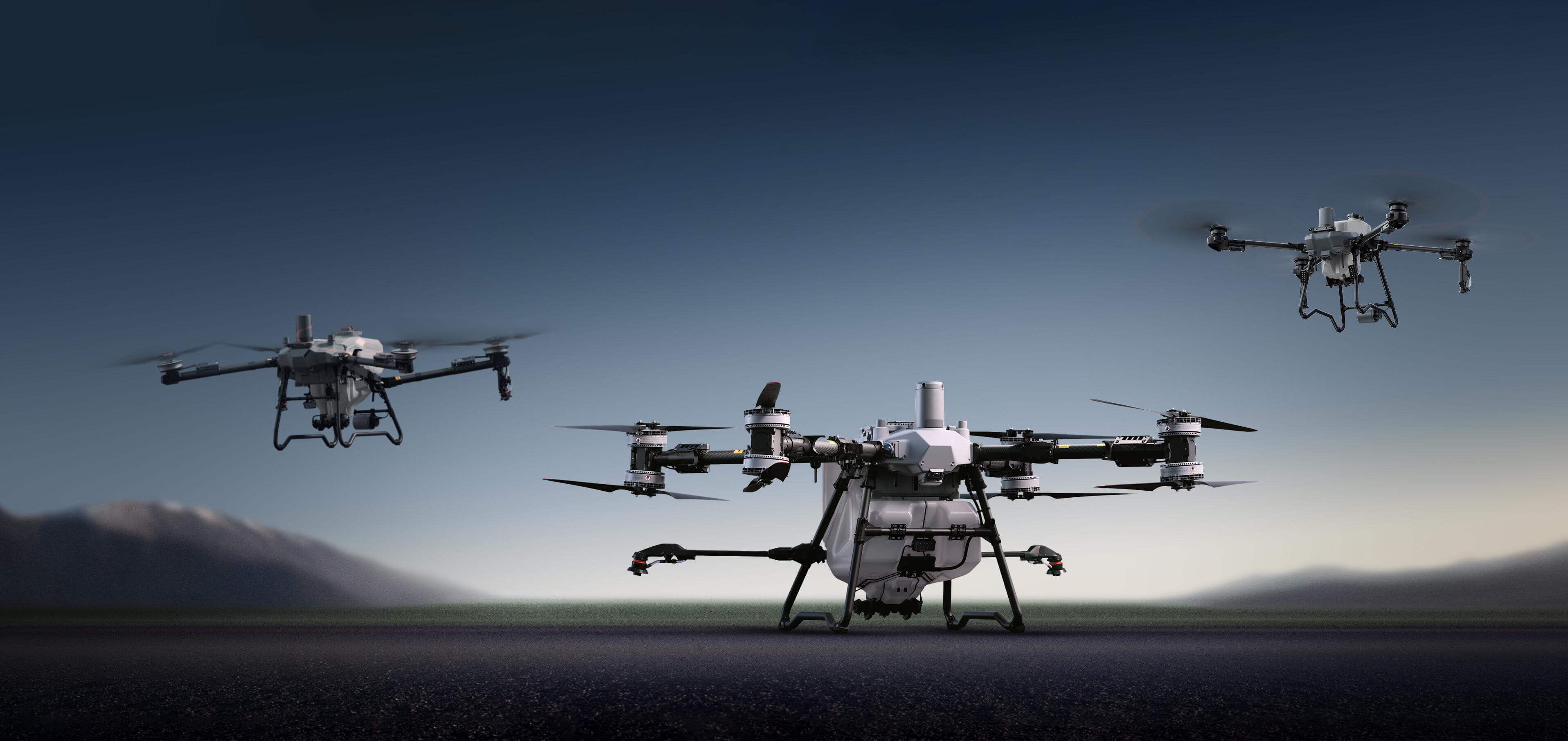
A crop duster sprays your field for about $12.50 an acre. A drone custom operator charges around $16 for the same acre. Farmers are buying $39,999 spray drones anyway. A University of Missouri model shows when that math works — and when it doesn’t.
The Machine
The DJI Agras T100 is the largest agriculture drone DJI sells. It carries 100 liters of liquid — 2.5x the tank of the previous T50 — or 150 liters of dry product for spreading. Maximum payload is 100 kg. Top working speed is 20 m/s, double the T50, per an independent review at Sprayers101.
DJI announced it globally on July 15, 2025. US dealers such as Drone Nerds now list the ready-to-fly kit at $39,999: airframe, RC Plus 2 controller, spray system with air-cooled heat sink, three DB2160 batteries, and a C12000 power supply. A spare battery is $4,088. Dealer listings claim up to 70 acres per hour at a 2-gallon-per-acre rate. Treat that as a best case.
The sensing package is LiDAR, millimeter-wave radar, and a five-camera vision system. A battery recharges from 30% to 95% in 8-9 minutes. Spray width is rated at 5-13 m.
One date matters. On December 23, 2025, the FCC added foreign-made drones — DJI included — to its Covered List. New models can no longer get FCC authorization. The T100 was authorized before the cutoff, so it remains legal to buy, sell, and fly. Its successor may never reach the US. DJI is suing.
The Numbers
The economics benchmark is the University of Missouri Extension ownership model (March 2025), built around the smaller Agras T40 at $23,000 with an 8,000-acre service life.
| Metric | Traditional | This tech | Delta | Source |
|---|---|---|---|---|
| Hiring it out | Airplane: $12.50/acre | Drone custom operator: ~$16/acre | +$3.50 (+28%) | MU Extension |
| Owning, 1,000 applied acres/yr | Hire the plane: $12.50/acre | Own MU’s $23,000 T40: $12.27/acre | −$0.23/acre — MU’s T40, not the T100 | MU Extension |
| Owning, 2,000 applied acres/yr | Hire the plane: $12.50/acre | Own MU’s $23,000 T40: $8.32/acre | −$4.18 (−33%) — MU’s T40, not the T100 | MU Extension |
| Custom operator, 4,000 acres/yr | Rate billed: ~$16/acre | MU’s $23,000 T40, full cost: $7.39/acre | $8.61/acre margin — MU’s T40, not the T100 | MU Extension |
| Spray tank | Agras T50: 40 L | Agras T100: 100 L | +150% | DJI / Sprayers101 |
| Working speed | Agras T50: 10 m/s | Agras T100: 20 m/s | 2x | Sprayers101 |
Two adjustments before you copy this into a loan application. MU priced a $23,000 drone; the T100 kit is $39,999. Spread the extra $16,999 across the same 8,000-acre life and costs rise about $2.12 per acre, before interest. And MU’s bottom line is blunt: owning beats the $12.50 airplane rate at roughly 980 applied acres per year. Below that, the plane wins. That 980 is for the $23,000 drone, though. Carry the T100’s extra $2.12 an acre through the same curve and its own break-even lands closer to 1,300 acres — our math, on MU’s numbers.
What Breaks
The first independent field impressions came from application specialist Dr. Jason Deveau at Sprayers101 in May 2026. His list is specific. The rated 5-13 m swath looks optimistic; his measurements showed uneven, bimodal deposition between nozzles. Speed fights coverage: DJI recommends flying above 5 m at high speed, while good coverage wanted 3-4 m. Faster flight also keeps droplets airborne longer, which raises drift risk.
Batteries overheated at slow speeds in his testing; the problem eased above 15 m/s. He calls three batteries and the cooling station necessary equipment, not accessories. You will also feed a field power source — MU budgets fuel at $0.15 per applied acre.
Paperwork is the real lead time. In the United States, commercial spraying with a 175-177 kg drone requires four approvals: a Part 107 pilot certificate, aircraft registration, an FAA Section 44807 exemption, and a Part 137 agricultural operator certificate. First-of-type exemptions historically took “around a year to a year and a half,” per drone attorney Jonathan Rupprecht. Summary grants that copy prior approvals move faster. Part 137 then follows about 1-2 weeks after the exemption. Restricted-use products also need a certified applicator — check your state.
The operating range is 0°C to 40°C, so no freezing-weather work. And the Covered List cuts both ways: your T100 stays legal, but DJI cannot certify new US models. Long-term parts and trade policy are open questions under a $40,000 machine.
Who Should Buy This
The custom operator, first. MU’s custom scenario assumes 4,000 acres a year, $30/hour labor, 8% interest, and $16 per acre billed. Full cost: $7.39 per acre. That is an $8.61 margin — about $34,000 a year over all costs — with the $23,000 drone. Swap in the T100 kit at $39,999 and the same model still clears roughly $26,000 a year after depreciation. Explicit assumptions: same 8,000-acre life, kit price only, spare batteries and licensing months not included.
The 2,000-acre applicator, second. At 2,000 applied acres a year, MU’s model puts owning at $8.32 per acre against the $12.50 plane. Carry the T100’s extra $2.12 and it is $10.44 — about $4,120 a year saved, not the $8,360 the unadjusted figure implies. You also spray on your schedule, not the flying service’s.
Not for: operations under roughly 1,300 applied acres a year, which is where the T100 breaks even once its own price is in the model (hire it out); anyone who needs revenue this season but has not filed the FAA paperwork; anyone without a plan to haul, power, and cool a 175 kg machine in the field.
The Stack
No affiliate links in this issue. When a link earns us a commission, we always say so. Verdicts are never for sale.
You cannot legally bill a single acre without a Part 107 certificate — the first of the four gates above. The Pilot Institute Part 107 Remote Pilot course is $159 (list $249): 15 hours of video, 300+ practice questions, lifetime access. Fail the FAA exam on your first try and they refund the course and mail you $175. Against a $39,999 machine, $159 is the smallest line in the budget — and the only one with a money-back guarantee.
The T100 itself: no affiliate program exists for it. We earn nothing if you buy one. That is how you know the numbers above are straight.
Correction, 2026-08-26: the ownership and custom-operator rows of The Numbers table now name their machine. Those per-acre costs are MU Extension’s model of a $23,000 Agras T40, not the $39,999 T100 this report is about — so the −33% at 2,000 acres is the T40’s advantage, and the T100’s is the $10.44 against $12.50 that the verdict already carried. No number changed.
Know an operator pricing a spray drone? Forward this. Subscribing is free at readwildtech.com.
One machine. All the numbers.
Mondays and Thursdays in your inbox. Free, no spam.